Vientiane, Lao PDR, November 3, 2025. H.E. Santiphab Phomvihane, Minister of Finance and Deputy Head of the National Steering Committee for the 2025 Population and Housing Census alongside with his delegation conducted a field visit in Vientiane Capital on November 3.
The visit formed part of ongoing efforts to monitor and support the nationwide field data collection process for the country’s first-ever digital census. Nationwide data collection for the Population and Housing Census will take place from November 3 to December 28, 2025. The move followed the completion of training 11,000 of enumerators who will be deployed across the country to collect information from all residents and households using handheld digital devices. This includes foreign nationals who have lived in Lao PDR for six months or longer.

H.E Athsaphangthong Siphandone, Vientiane Mayor, Mr Visone Laomao, Deputy Head of the Lao Statistics Bureau (LSB) and Dr. Bakhtiyor Kadyrov, UNFPA Representative, was part of the delegation. They were accompanied by officials from central census office and capital officials on a visit to Chanthabouly District. The purpose of this visit was to mark the first day of field data collection and to engage with local authorities on any potential issues that may require attention to ensure a smooth and effective enumeration process.
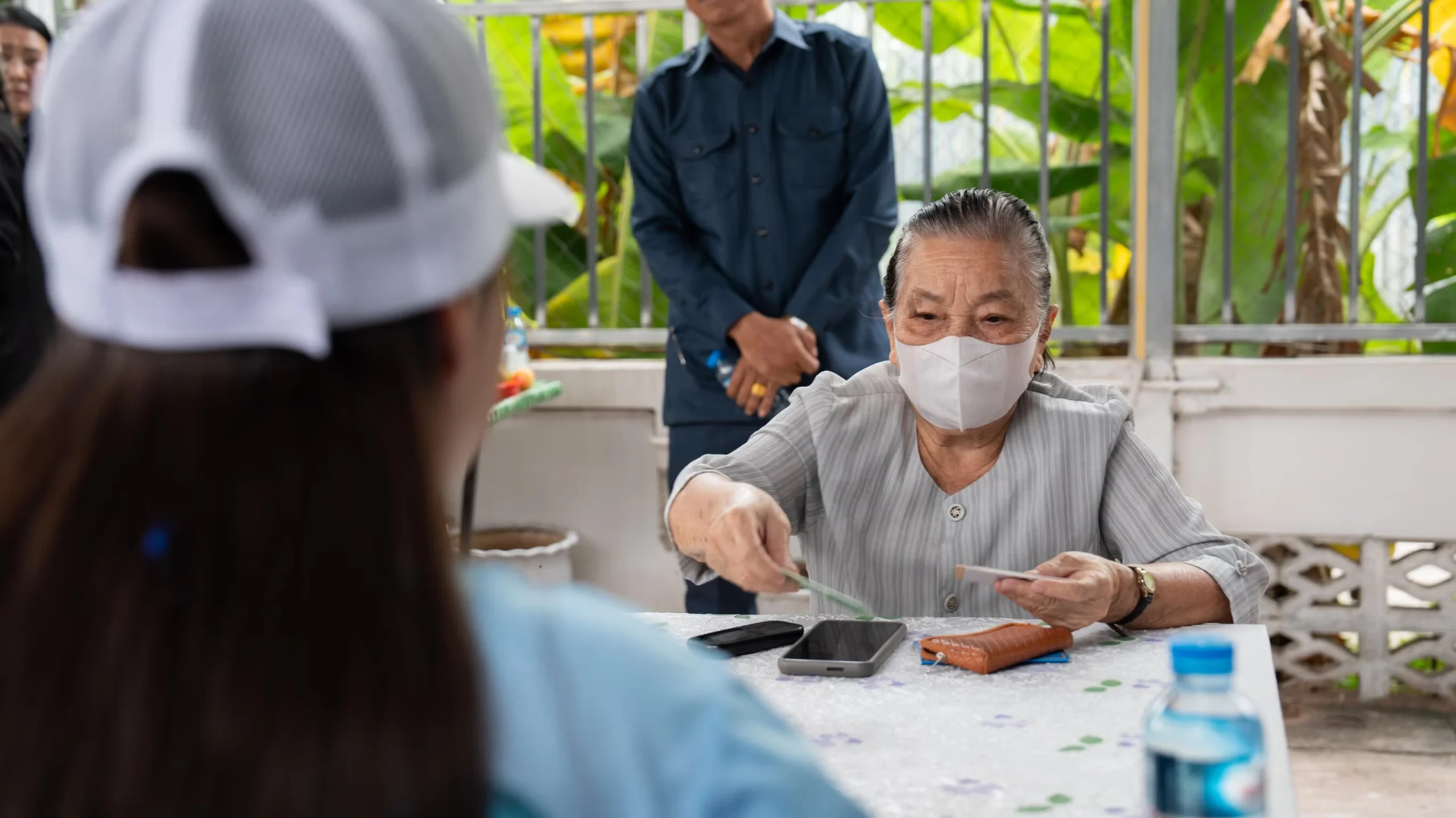
After meeting with local authorities, the delegation visited Sisavat villages and Thongtoum in Chanthabouly districts to observe enumerators conducting household interviews as part of the nationwide data collection exercise. The 2025 Population and Housing Census will collect vital data on Lao PDR’s population, including its size, structure, growth, and distribution, as well as information on ethnicity, disability, housing, access to services, and education. This comprehensive picture of living conditions across the country, highlighting both progress and remaining challenges, will provide the Government of Lao PDR with the evidence needed to design and implement more effective policies and programmes.
Building on this, the data from the 2025 Population and Housing Census will serve as a key reference for the Government in monitoring the implementation of the 10th National Socio-Economic Development Plan (2026–2030). It will also provide an essential framework for tracking progress toward the Sustainable Development Goals and for strengthening strategies that advance the empowerment of women, young people, and persons with disabilities.

During the visit, H.E Santiphab stressed the significance of the census and urged the capital and district census steering committee to facilitate enumerators to reach everywhere and count everyone.
“Accurate data is fundamental to effective national development. When data is inaccurate, policies and plans risk being misaligned with the real needs and priorities of the people.” he said.
Dr. Bakhtiyor Kadyrov noted that, after four years of preparation, nationwide field data collection had officially begun. UNFPA, together with development partners including DFAT Australia, the Swiss Development Cooperation (SDC), Luxembourg, GIZ, the United States, and
China Aid, is proud to provide technical and financial support to Lao PDR in conducting its first-ever digital census.
“UNFPA is proud to be part of this national effort. Together with our partners, we will continue to provide the support needed to ensure the success of this first-ever digital Population and Housing Census. We believe the census is not only about counting the population, but about
recognizing and empowering people, because behind every number is a person, a story, and a dream,” he said.
With the close guidance of the Census Steering Committee and technical support from UNFPA and development partners, the Lao Statistics Bureau began preparations for the 5th Population and Housing Census in 2021. The 2025 census will be the first digital census in Lao history, laying a strong foundation for the modernisation and digitalisation of the national statistical system. This digital approach will not only enhance the accuracy of data collection but also make the information more accessible and useful for everyone.